
JAKARTA, INDONESIA–Schools Climate Action Projects convened educators, students, experts, and institutions from across Asia, Africa, Europe, North America, and Oceania to advance school-based climate action, sustainability, and youth-led environmental solutions.

The Schools Climate Action Projects (SCAP) successfully held the Regional Dialogue: Schools Climate Action Project 2026 on Saturday, April 25, 2026, via Zoom, bringing together schools, educators, students, climate advocates, and partner institutions for an international exchange on climate education, sustainability, resilience, and student-led innovation.
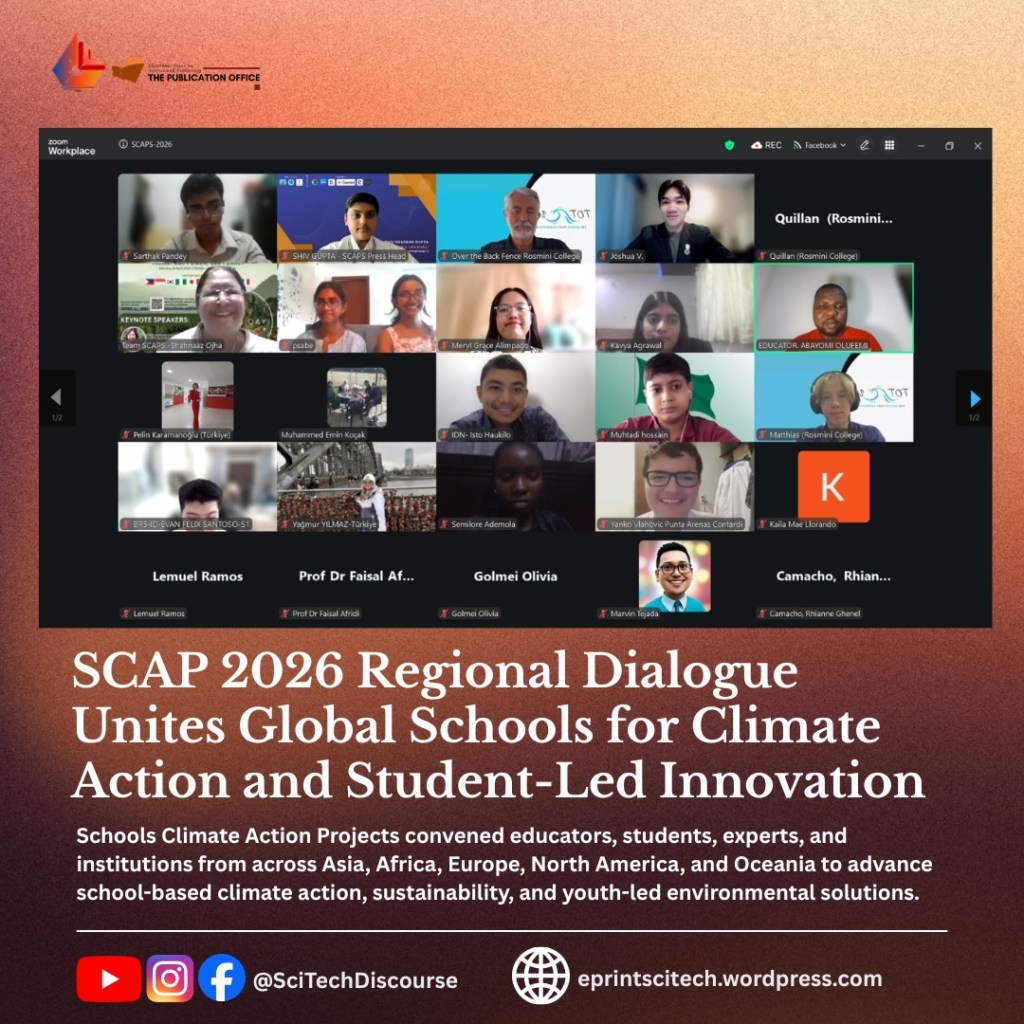
The event was organized as a short conference-style dialogue with keynote addresses, thematic presentation clusters, moderated synthesis sessions, acknowledgements, and a concluding virtual photo. The event opened with Zoom room access, attendance checking, technical reminders, and welcome remarks by Joshua Vidal, Executive Advisor, Founder of SCAP, and Convener of the event. The programme featured keynote sessions, four thematic presentation clusters, moderated discussions, acknowledgements, and a welcome message by Shahnaaz, Acting Regional Director and Convener of SCAP.
The dialogue opened with the first Keynote Address by Dr. Emma Porio, who helped frame the urgency of climate action, transformative adaptation, and the role of schools in responding to climate and environmental risks. Her session set the tone for the dialogue by emphasizing the importance of connecting climate science, justice, community resilience, and education.
The first thematic cluster focused on Global Youth Climate Citizenship and Collaboration. Presentations included TOTCUS: The Ocean That Connects Us, a global youth-led collaborative network from New Zealand and Chile; Private Edirne Mektebim College from Türkiye; Murat Kantarcı Science and Arts Center from Türkiye; and Beatrice De Salles’ presentation, “From Classrooms to Global Arenas: Youth Climate Leadership through Diplomacy, Culture, and Sport,” from the United States. This cluster highlighted the importance of youth participation, international cooperation, climate diplomacy, and student leadership in addressing environmental challenges.
The second cluster centered on Whole-School Sustainability and Green Campus Practices. It featured presentations from Warsha Sawant on school-based sustainability and environmental stewardship in India; a presentation on student-led sustainability practices for climate action, including waste management, composting, recycling, and kitchen gardening, also from India; Pramiti School from India; and Frobel Academy from Bangladesh. These sessions showed how schools can become living laboratories for sustainability by embedding environmental action into daily school practices, campus management, and student activities.
The third cluster focused on Innovation, Policy, and Environmental Design. Presentations included “Designing Social Forestry Insurance Model: Innovation of Livelihood Protection and Enhancing Forest Conservation in Indonesia” from Indonesia; “Reimagining Straws: Implementing Grass-Based Straws from Phragmites australis” from Indonesia; and “AquaShield: Smart Water Cleaning System” from India. This cluster highlighted how young people and school communities can develop practical innovations that respond to pollution, water safety, livelihood protection, forest conservation, and sustainable design.
The fourth cluster explored Community Resilience, Agriculture, and Food Security. It included the Climate Agriculture Youth Equity Network Sierra Leone (CAYEN-SL) presentation on youth-led climate action and agricultural resilience in Sierra Leone; Warsha Sawant’s presentation on climate, conflict, pollution, and collective environmental action from India; and Pearls Garden High School from Nigeria. These presentations broadened the dialogue by connecting climate education with food security, agriculture, community resilience, and collective environmental action.
Participant reflections from the session report showed that the event was well received by attendees. Joseph B. Dimaano described the meeting as comprehensive and informative, noting that the session helped participants learn about climate solutions relevant to their communities. Geoff Wood commended the organizing team for managing the event despite technical challenges and praised the student presenters as excellent exemplars. Kavya Agarwal described the event as memorable, especially because it connected people across the globe around environmental protection. Prof. Dr. Faisal Ahmed Khan Afridi noted that the presentations were informative and supported by strong sound and video quality.
Overall, the SCAP 2026 Regional Dialogue demonstrated that climate education is no longer limited to classroom awareness. It can become a whole-school and whole-community movement where students investigate local risks, design environmental solutions, collaborate across borders, and contribute to resilience-building. Through its international participation and diverse presentation themes, SCAP 2026 affirmed that schools can become powerful platforms for climate action, sustainability, innovation, and hope.
Streaming can still be assessed here: click, if unavailable due to Facebook policy, kindly contact the email attached below.
For partnership, interview, collaboration, or any related concerns, kindly contact jvidal.school@gmail.com (Joshua VIDAL, Founder of SCAP)and cc: shahnaaz.ojha@dpsnagpurcity.com (Shahnaaz OJHA, Acting Regional Director of SCAP 2026)
— End —
 The SCAP Times
Leave a comment